USA
USA Canada
 Germany
 France
 UK
UK Japan
Japan Korea
Korea Australia
 Indonesia
 Vietnam
 South Africa
 Rwanda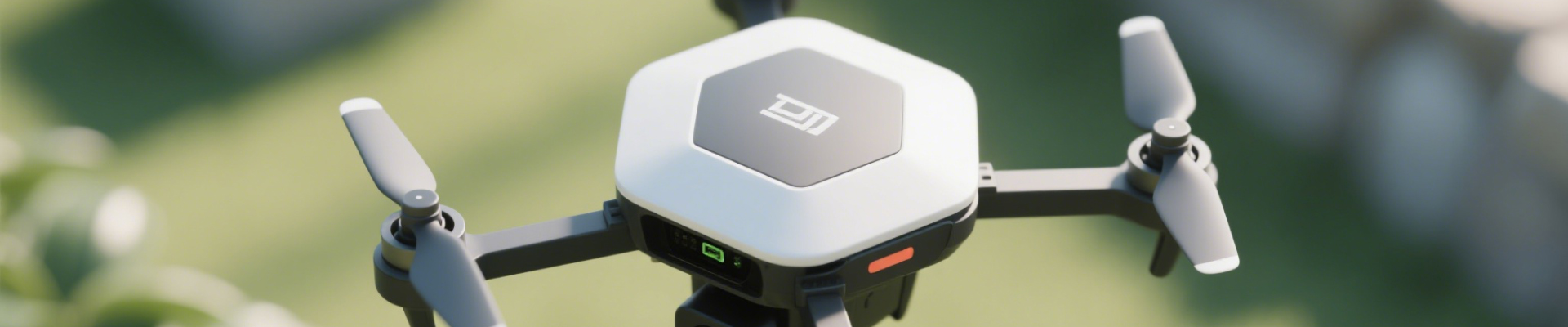
A drone is an unmanned aircraft that is operated by radio remote control equipment or an on-board computer programmed control system. With its simple structure and low cost of use, a drone is not only capable of accomplishing the tasks performed by manned aircraft, but is also more suitable for tasks that are not suitable for manned aircraft. There is a great role in emergency response and early warning of unexpected things. Drone aerial photography of the 20 operation manual, can be memorized.
1. For beginners, flying in an open place, although the flight does not have to look up and keep staring at the aircraft, to ensure that the aircraft has been in the field of vision, but the obstruction of tall buildings and vegetation sometimes affects the remote control and real-time signal.
2. When you start to fly, you can turn on the novice mode, don't rush to take pictures, first familiarize yourself with the feel and flight. The airplane in the air and you look at the monitor in the east, west, north, south, left, right, up and down is not the same.
3. Think about the general flight path, how you want to shoot, how to shoot video, photos in which position to shoot, first in the brain have a general idea. Be sure to make a good shooting plan in advance, which is also known as a flight script.
4. A common mistake made by newbies is to push the throttle too much, resulting in too fast a takeoff, and then let go of the stick at once, resulting in too fast a descent, even touching the ground.
5.The correct way to do this is to give the throttle slowly and let the craft reach equilibrium slowly.
6. It's not right to continuously give throttle before hitting something. If you feel that you are about to hit an obstacle, the right thing to do is to push the throttle to 0 and let the drone gently fall on its own.
7. After takeoff, hover at an altitude of about one meter, fully release the remote control stick, observe the drone's offset direction, and then land. Follow the instructions in the included manual to adjust the drone. Then take off again and hover to observe. Repeat several times until you are not giving any input and the drone is able to hover stably in the air.
8.The purpose of the 3-axis gimbal on the DJI aerial camera is to ensure that the camera is stabilized and remains in a specific position no matter how much the vehicle shakes.
9.Try to keep the camera direction horizontal, so that you can avoid the horizon bending, and at the same time ensure a natural architectural shot.
10.Once your drone is able to hover in the air, try to control the drone flight with the vertical and horizontal joysticks of the remote control. Let it fly a little farther away and then come back.
11. In addition to real-time manual control, the drone's route and shooting angle can also be pre-programmed, and some people have produced good work with this fully automated approach.
12.Change while flying under different focal lengths for a more impactful visual effect.
13. Adjust the camera angle to the bottom, parallel to the ground. This is one of the angles that can best reflect the perspective of aerial photography, and you can often find a lot of surprises by shooting from this angle.
14. The control of flight speed is very important, when shooting video clips, to avoid sudden acceleration and deceleration, so that the video clip will appear obvious lag.
15. According to the normal shooting process, it should be a shot to turn the field once.
16. A big mistake of newbies is that they don't turn the field or turn the field less frequently, the flyer or the photographer has a limited perspective, and the results of the shooting are not in place, which makes the shooting time prolonged.
17. Flyers stand more fixed, will fly directly to the next shot location (the distance between the two closer) to shoot, it is likely to encounter obstacles or signal blocking, making the drone crash.
18. Fly as slowly as possible under the permitted conditions, you can adjust to speed up the speed of the video clip later, but it is difficult to slow down.
19. When taking photos, try to use RAW format. This is for the same reason as the camera, to get more room for post-processing.
20. Considering the consumption of power, for example, in high altitude areas with strong winds, telephoto lenses will be more shaky, you can take a compromise in the middle of the lens and the focal length, try to perfectly realize the required picture, try to use a small aperture to do aerial photography.
The above is the 20 operation manual of drone aerial photography, I hope it will help you. With the gradual deepening of China's reform and opening up and the rapid development of economic construction, the landforms of various regions have undergone great changes. Existing aviation remote sensing technology means have been unable to adapt to the needs of economic development. The new remote sensing technology serves the growing economic construction and cultural cause. If you have other questions, you may call us, I sincerely for your service.